Sharpen Your Knife Like a Pro: 1 Simple Trick Millions Don’t Know!
How to Sharpen Your Kitchen Knife with Ease
Introduction
Picture this: it’s time to prepare dinner, but your kitchen knife struggles to slice through vegetables, making the task cumbersome and frustrating. A dull knife not only hampers your cooking experience but can also be a safety hazard. Fortunately, sharpening your kitchen knife doesn’t have to be a complicated process. By learning a simple technique, you can restore its effectiveness and enjoy a smoother cooking process. Read on to discover how you can easily sharpen your knife and elevate your culinary skills.
Essential Materials
Before you start sharpening your kitchen knife, gather the essential materials you will need. Having everything at hand will make the process more seamless and efficient.
- Whetstone or honing rod – These tools help realign and sharpen the blade efficiently.
- Water or oil – Depending on whether you are using a water stone or an oil stone.
- Clean towel – For wiping the knife and ensuring it’s dry before and after sharpening.
- Cutting board – A stable surface to work on.
With these materials, you’ll be ready to restore your knife’s sharpness and improve your kitchen experience.
Step-by-Step Guide to Sharpening
Follow these simple steps to sharpen your kitchen knife and keep it in top condition.
1. Assess and Prepare the Knife
- Clean the knife: Use a towel to dry off any moisture and remove any residue.
- Position the whetstone: Place it on a stable surface with the coarse grit facing up if your knife is very dull.
- Soak the whetstone: If you’re using a water stone, soak it in water for about 10-15 minutes.
2. Sharpen the Blade
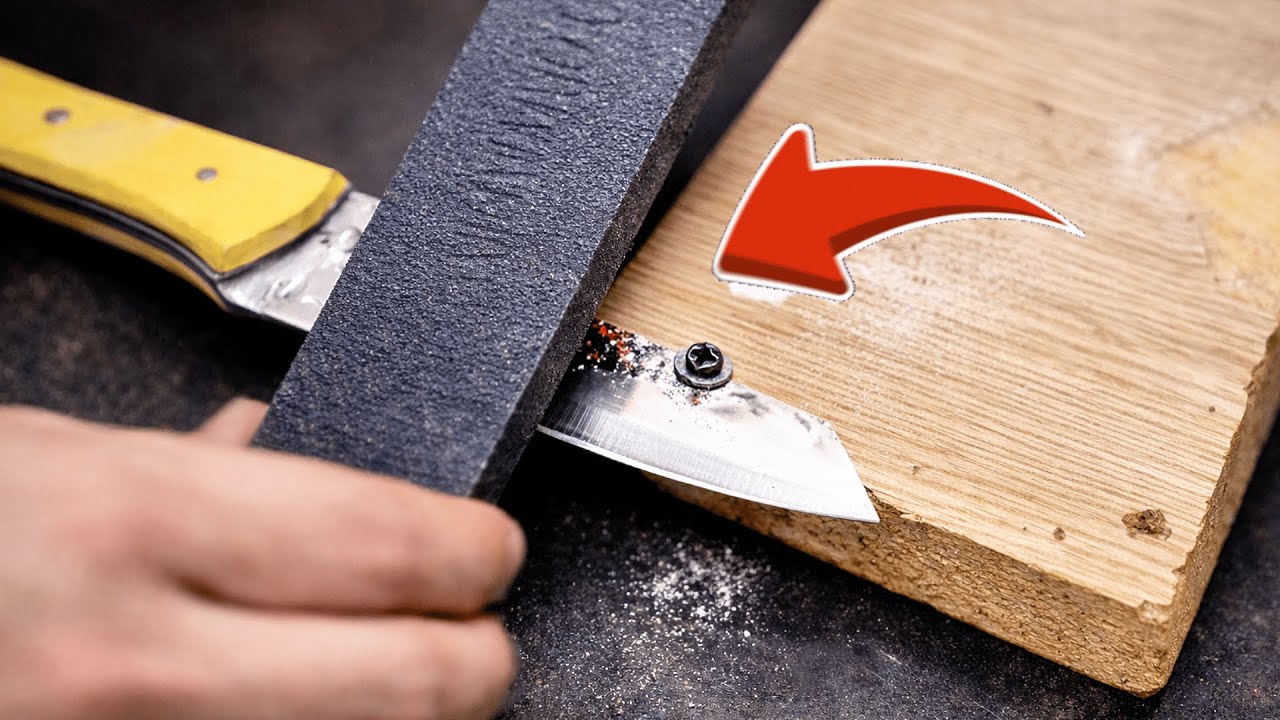
- Angle the knife: Hold the knife at a 20-degree angle against the stone.
- Slide the blade across the stone: Begin at the heel of the knife and gently drag it to the tip, maintaining the angle.
- Repeat: Do this several times on one side before switching to the other side.
3. Finish and Clean
- Switch to finer grit: Repeat the sharpening process with a finer side of the whetstone to finish refining the edge.
- Rinse the knife: Clean it under running water and dry with a towel.
- Store safely: Keep your knife in a protective sheath or magnetic strip to maintain its sharpness.
By incorporating these steps into your kitchen routine, you’ll ensure your knives are always ready for action, making cooking much more enjoyable.
Common Mistakes to Avoid
While sharpening your kitchen knife, it’s easy to make a few missteps. Here are some common mistakes to watch for:
- Using too much pressure: Applying too much force can damage the blade instead of sharpening it.
- Not maintaining the angle: Failing to keep a consistent angle can lead to uneven sharpening, affecting the knife’s performance.
- Over-sharpening: Sharpening too frequently can wear down the blade unnecessarily; it’s best done only when needed.
- Neglecting to clean: Forgetting to clean the blade after sharpening can lead to corrosion or residue build-up.
- Using the wrong tool: Using a honing rod instead of a whetstone can be ineffective for deep sharpening needs.
FAQ
1. How often should I sharpen my kitchen knife?
It’s generally recommended to sharpen your kitchen knife every few months, depending on how frequently you use it.
2. Can I use a regular stone to sharpen my knife?
Using a regular stone is not advisable, as it may not provide the proper surface needed to sharpen effectively. A whetstone is specifically designed for this purpose.
3. Is it safe to sharpen my knife?
Yes, it’s safe as long as you follow the proper techniques and use caution while handling the knife.
Conclusion
Sharpening your kitchen knife is a straightforward task that can greatly enhance your cooking experience. By understanding the essential materials and following the steps outlined, you’ll keep your knives in prime condition. Have you tried sharpening your knives at home? Share your experience in the comments below.